






HOW WOOLLEN MILL MACHINES TRANSFORM MERINO WOOL
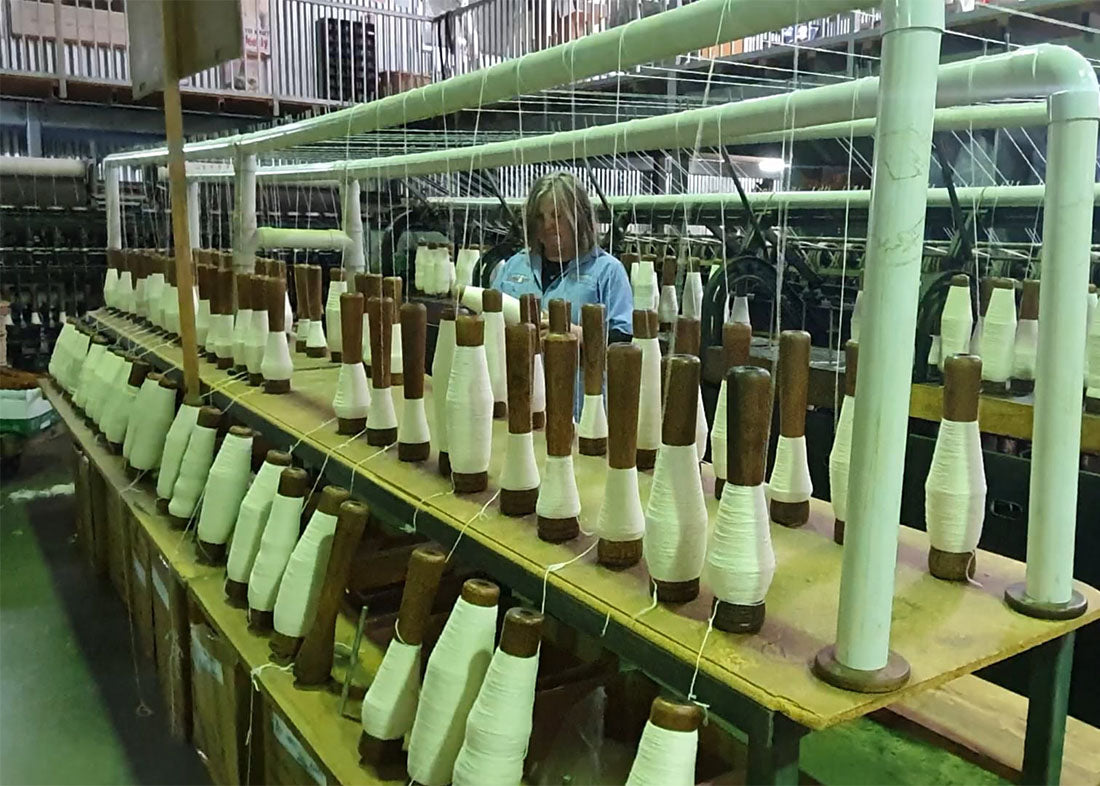

Merino wool has long been prized for its exceptional softness, warmth, and versatility. Yet the journey from raw fleece to premium yarn involves far more than simply spinning fibers together. The machinery used in traditional woollen mills plays a crucial role in transforming raw Merino wool into yarn with superior strength, consistency, and performance characteristics.
There’s sophisticated engineering behind what might appear to be a simple process. From the initial carding stages through to the final twisting, every machine serves a specific purpose in enhancing the inherent qualities of Merino wool.
THE FOUNDATION: CARDING
The transformation begins with carding, a critical first stage that prepares the wool fibers for spinning. A carding machine works to disentangle and align the wool fibres, creating a more uniform web of material. This process is essential because it determines many characteristics of the final yarn.
The carding stage offers mills flexibility in the type of yarn we ultimately produce. Wool yarns that have been carded tend to be more irregular in appearance but possess exceptional warmth retention properties. This irregularity creates tiny air pockets within the yarn structure, providing excellent insulation. For mills seeking to produce yarn with different characteristics, the carding process can be followed by combing, which results in softer, smoother yarns with a more refined appearance.
CREATING CONSISTENCY: GILLING MACHINES
Once the wool has been carded, gilling machines take over to ensure consistency across batches. These sophisticated machines blend different wool tops together according to precise yarn specifications. The gilling process ensures that all fibres are aligned, creating a uniform product that meets the mill’s exacting standards.
By carefully combining wool from different sources or different parts of the fleece, gilling machines help mills achieve specific qualities in their yarn while maintaining uniformity across production runs.
The alignment achieved during gilling also prepares the fibres for the next crucial stage, setting the foundation for the strength and smoothness that will be developed through subsequent processing.
ACHIEVING ALIGNMENT: THE DRAWING PROCESS
The drawing process represents a pivotal stage in transforming loose wool into yarn. During drawing, the wool passes through a series of carefully calibrated rollers that work in concert to straighten individual fibers and make them increasingly parallel to one another.
This alignment is crucial for multiple reasons. First, parallel fibres create significantly stronger yarn than randomly oriented ones. When fibres lie in the same direction, they can share the load more evenly when the yarn is under tension, preventing weak spots that might lead to breakage.
Second, the parallel arrangement contributes to the smoothness of the final product. Fibres that protrude at various angles create a rough, irregular surface, while aligned fibres produce yarn with a sleek, consistent texture that feels and performs better.
Each successive set of rollers refines the alignment further. This gradual approach ensures that the delicate Merino fibres aren't damaged through overly aggressive processing.
THE ART OF SPINNING: SPINNING MACHINES
Spinning machines represent the heart of yarn production, where drawn wool is finally transformed into actual yarn. These machines feature several rows of rollers that guide the fibers through a carefully orchestrated sequence of operations.
As the wool passes through the spinning machine, it becomes progressively thinner. The rollers apply controlled pressure and tension, drawing out the fibre bundle while maintaining its integrity. Simultaneously, the machine adds twist to the thinning strand. This twist is what ultimately holds the individual fibers together, transforming them from a fragile collection of separate strands into a cohesive, strong yarn.
The precision required in this stage cannot be overstated. Too little twist results in weak yarn that falls apart easily, while too much twist creates stiff, wiry yarn that lacks the desired drape and feel.
The controlled reduction in thickness, combined with precise twisting, is what creates strong, consistent yarn from what begins as loose, fragile fibre. This transformation showcases the sophistication of traditional woollen mill machinery.
ADDING STRENGTH: TWISTING AND PLYING MACHINES
While single-ply yarn has many uses, some applications demand even greater strength and durability. This is where twisting and plying machines come into play. These machines can twist together multiple single yarns to create stronger, more robust products.
This technique is particularly valuable for yarns destined for hard-wearing applications like outdoor wear.
The twisting process also affects the yarn's appearance and behavior. Different twisting configurations can create yarns with varying degrees of elasticity, thickness, and texture, allowing mills to customise their products for specific end uses.
THE CUMULATIVE EFFECT: QUALITY THROUGH PROCESS
The true magic of traditional woollen mill machinery lies not in any single machine, but in the cumulative effect of the entire process. Each stage builds upon the previous one, progressively refining and improving the wool's characteristics.
The sequential processing through these specialised machines ensures consistency that would be impossible to achieve through manual methods.
Moreover, the machinery maintains fiber integrity throughout the process. Despite the multiple stages of handling, the equipment is designed to work with wool's natural characteristics rather than against them, preserving the qualities that make Merino wool so prized, while enhancing its practical performance.
SEE THESE MACHINES IN ACTION
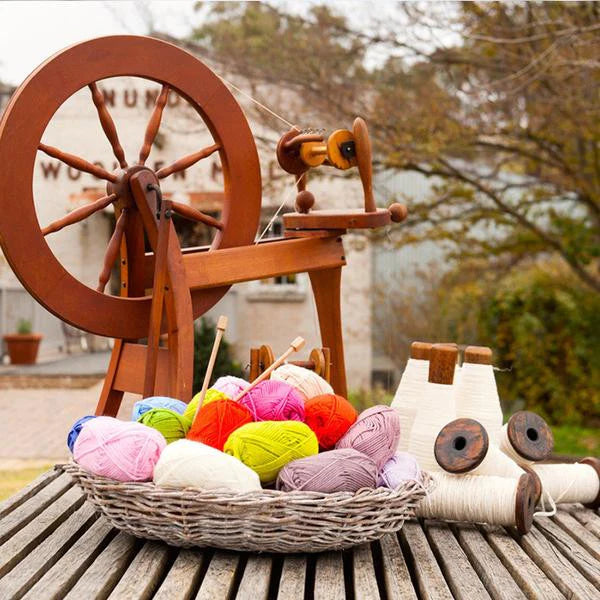
If you’re ever travelling on the New England Highway in Australia, detour via the picturesque village of Nundle to tour the Nundle Woollen Mill. See the Mill’s collection of beautifully restored vintage machines. Buy the Merino yarn for which the Mill is famous.
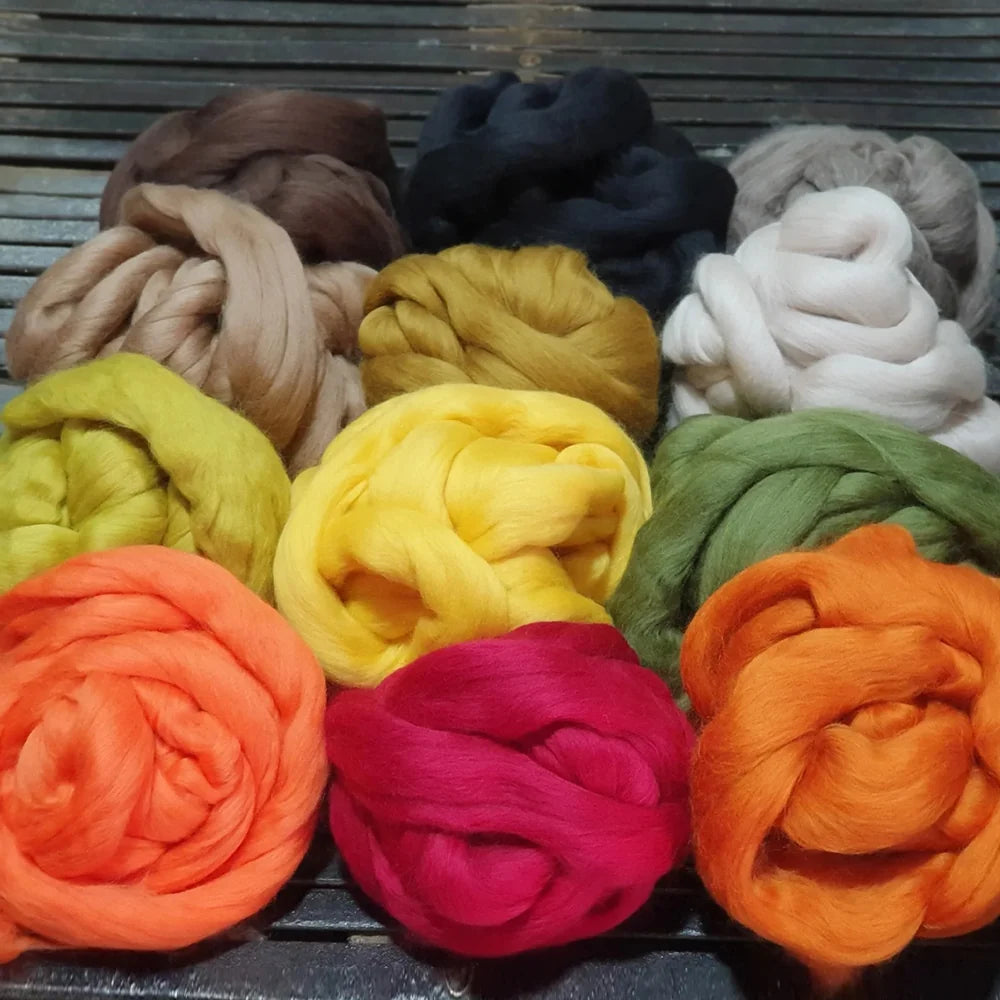
If you’re impatient to start knitting, check out the full range of Nundle Merino wool yarns and Wool Tops, in everything from 4 ply sock yarn to wool vine for chunky rugs.
Nundle Wool & Yarns


